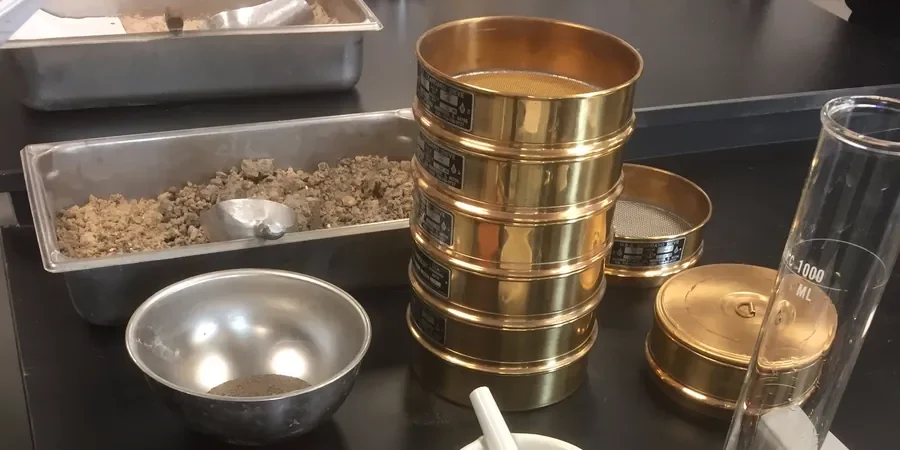
In Hull, the role of geotechnical laboratory testing forms the bedrock of safe and compliant construction. The 'Laboratory' category encompasses the full spectrum of controlled testing on soil and rock samples to determine their physical, mechanical, and chemical properties. This is not merely an academic exercise; it is a critical step in translating site investigation data into actionable engineering parameters. From assessing the bearing capacity for a new housing development off Leads Road to evaluating the stability of embankments along the Humber, precise lab data is non-negotiable. A comprehensive laboratory programme, including solutions like soil classification, is the only way to move beyond visual descriptions and into quantifiable, repeatable results that underpin design calculations.
Hull's unique geological context makes local laboratory expertise particularly vital. The city and its surroundings are predominantly underlain by Quaternary superficial deposits, notably the Devensian Till (or Skipsea Till) and post-glacial alluvium associated with the Humber Estuary and River Hull. These deposits are notoriously variable, ranging from stiff, overconsolidated clays to soft, compressible silts and peats. A detailed soil mechanics study is essential to characterise this variability. Parameters like undrained shear strength in the alluvial silts or the consolidation characteristics of a buried peat layer can make the difference between a successful foundation design and a future structural failure. Without laboratory testing, the behaviour of these complex, water-sensitive soils under load remains an unknown risk.
The framework for all laboratory testing in the UK is tightly governed by national standards, ensuring consistency and reliability. The primary reference is BS 5930:2015+A1:2020, the code of practice for ground investigations, which mandates appropriate laboratory schedules. Testing procedures themselves are detailed in the BS 1377 series, with Parts 1 through 9 covering everything from moisture content and Atterberg limits to triaxial compression and consolidation tests. For chemical testing, particularly in Hull's brownfield sites, BS EN ISO 17892 series and specific guidance on aggressive ground from BRE Special Digest 1 are applicable. Compliance with these standards is not optional; it is a fundamental requirement for any report submitted to the local planning authority, Hull City Council, or to warranty providers like NHBC for new build schemes.
The types of projects in Hull that demand a rigorous laboratory testing programme are diverse. Large-scale infrastructure, such as the ongoing A63 Castle Street improvements and flood defence works along the Humber, requires advanced triaxial testing to model soil behaviour under complex loading. Commercial and industrial developments, particularly in the energy sector along the Saltend Chemicals Park corridor, often necessitate chemical testing for contamination and concrete aggressivity. Residential developments on the city's many brownfield sites require a full suite of classification, compaction, and possibly sulphate testing to ensure the ground is suitable. Even smaller projects, like an extension to a Victorian terrace in the Avenues, benefit from basic index testing and a soil classification to confirm the ground conditions before excavation begins.
Its primary purpose is to supply accurate, quantifiable data on soil and rock properties that cannot be reliably determined by field tests alone. This data, including strength, compressibility, and chemical composition, is essential for safe and economical engineering design, moving beyond visual descriptions to inform foundation design and earthworks specification.
Quality and consistency are ensured through strict adherence to British Standards, primarily BS 5930:2015+A1:2020 for investigation scope and BS 1377 for test methods. UKAS-accredited laboratories must follow these protocols. For any development in Hull, test reports conforming to these standards are a core requirement for regulatory approval and warranty acceptance.
The test schedule is determined by the project's objectives, the anticipated ground conditions from the desk study, and the design requirements. A preliminary soil classification is a starting point, but a foundation design in Hull's alluvial clays will require a detailed soil mechanics study with strength and consolidation tests. The geotechnical consultant defines this schedule, often in stages.
Turnaround time depends entirely on the complexity of the tests. Basic index tests like moisture content and particle size distribution can be reported within a week. However, advanced tests such as triaxial effective stress tests or incremental consolidation tests are time-dependent, as they require prolonged loading phases, and may take two to four weeks or longer to complete and report.