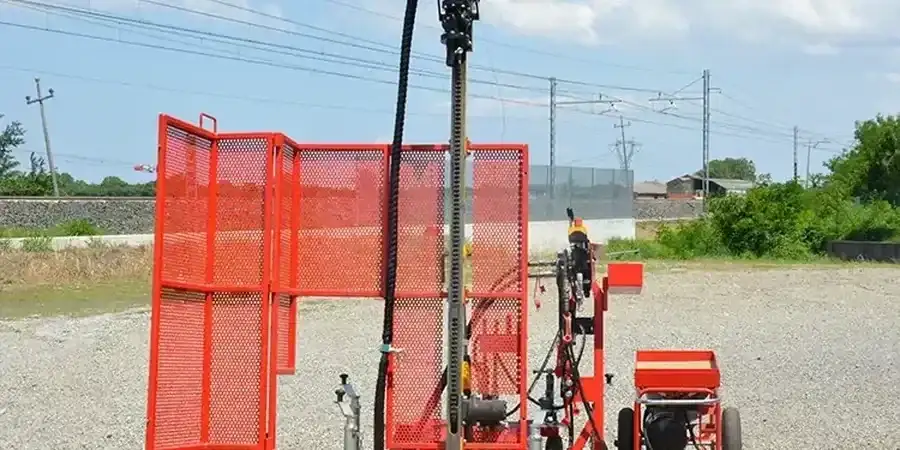
Ground investigation in Hull forms the foundation of safe and cost-effective construction across this distinctive riverside city. From the maritime heritage of the Old Town to the expanding residential and industrial estates on the urban fringe, understanding what lies beneath the surface is not just a regulatory requirement—it is a practical necessity. This category encompasses a comprehensive suite of techniques designed to characterise soil, rock, and groundwater conditions, including in-situ testing, sampling, and laboratory analysis. For developers, engineers, and architects working in Hull, a robust site investigation programme mitigates the risk of unforeseen ground conditions that can lead to costly delays, structural distress, or even catastrophic failure. The process draws on methods such as the Standard Penetration Test (SPT), trial pitting, and rotary coring to build a detailed ground model that informs foundation design, earthworks, and contamination assessment.
Hull's geological setting presents a particularly challenging environment that demands thorough investigation. The city sits predominantly on the tidal floodplain of the River Hull and the Humber Estuary, underlain by a thick sequence of Quaternary deposits. These superficial materials include soft, compressible alluvial clays, silts, and peats, often extending to depths of 10 metres or more before encountering the competent Cretaceous Chalk bedrock. The presence of made ground—historic fill from centuries of urban development and dock construction—adds another layer of complexity, introducing potential contaminants and variable engineering properties. Groundwater levels are typically high and tidally influenced, which has profound implications for excavation stability, buoyancy control, and long-term drainage design. A desk study alone cannot resolve these intricacies; physical investigation is essential to map the lateral and vertical variability of these deposits across a site.
Regulatory compliance in the UK mandates a rigorous approach to ground investigation, and Hull is no exception. The primary framework is set out in Eurocode 7 (BS EN 1997-1 and -2), which requires geotechnical investigations to be planned and executed to a standard commensurate with the project's geotechnical category and associated risk. The British Standards Institution's BS 5930:2015+A1:2020 provides the detailed code of practice for site investigations, governing everything from the spacing of exploratory holes to the execution of in-situ tests like the SPT. For projects involving potentially contaminated land—a common scenario in Hull's post-industrial waterfront zones—the investigation must also align with the Environment Agency's Land Contamination Risk Management (LCRM) guidance. Local planning authorities, including Hull City Council, routinely condition planning approvals on the submission of a satisfactory ground investigation report, making this early-stage work a non-negotiable gateway to construction.
The types of projects in Hull that demand a comprehensive ground investigation are diverse and growing. Major regeneration schemes, such as the ongoing redevelopment of the Fruit Market and the Humber Freeport initiatives, require detailed geotechnical data to support large-scale foundations, quay walls, and flood defence structures. Residential developments on greenfield or brownfield sites rely on investigation to assess ground stability, design sustainable drainage systems (SuDS), and satisfy warranty providers like the NHBC. Infrastructure projects, including highway improvements and wind farm cable routes crossing the estuary margins, depend on accurate ground models to manage risks associated with soft soils and aggressive ground conditions. Even smaller domestic extensions can trigger the need for targeted investigation, particularly where trees influence cohesive soils or where historic basements and wells are suspected. In every case, the data gathered through techniques such as the Standard Penetration Test (SPT) provides the empirical backbone for safe, economical design decisions.
A ground investigation in Hull determines the physical and chemical properties of the soil and rock beneath a site. Given the city's location on soft alluvial clays and historic fill, this process identifies hazards like low bearing capacity, groundwater ingress, and contamination, providing the essential data needed for safe foundation design, earthworks planning, and regulatory compliance with Eurocode 7 and BS 5930.
A ground investigation is typically required as a planning condition for most new developments in Hull, from residential extensions to major commercial schemes. It is essential before detailed foundation design can begin, particularly on brownfield sites or areas with known soft ground. The scope is dictated by the project's geotechnical category as defined in Eurocode 7.
Hull's deep deposits of soft alluvial clay, silt, and peat, combined with high, tidally influenced groundwater, demand investigation techniques suited to cohesive, water-sensitive soils. In-situ tests like the Standard Penetration Test (SPT) are crucial for assessing strength, while careful drilling methods are needed to prevent sample disturbance and collapse of boreholes in these challenging conditions.
Ground investigations in Hull must comply with Eurocode 7 (BS EN 1997) for geotechnical design and BS 5930:2015+A1:2020 for the code of practice on site investigations. For contaminated land assessment, the Environment Agency's Land Contamination Risk Management (LCRM) guidance applies. These standards ensure investigations are systematic, thorough, and legally defensible.