HULL UK
HULL

Geotechnical Engineering Services in Hull

Geotechnical engineering with regional judgment.

LEARN MORE

Our Hull office delivers comprehensive geotechnical services across the Humber region, supporting projects from initial site characterization through to foundation design and construction monitoring. We combine consolidated regional experience with calibrated laboratory and field testing to address local ground conditions effectively. Our team works closely with developers, contractors, and local authorities to provide code-compliant reports that facilitate planning and construction. Whether for residential, commercial, or infrastructure schemes, our integrated approach ensures solid subsurface understanding and practical foundation solutions. For deeper insights into our methodologies, explore our work on soil classification and geotechnical analysis for soft soil.
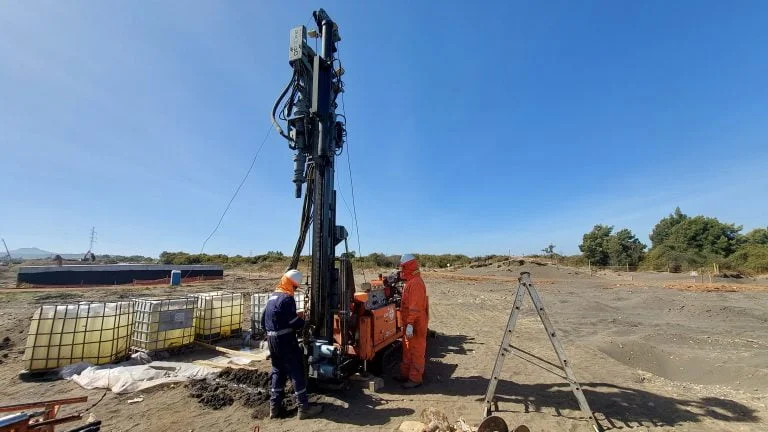
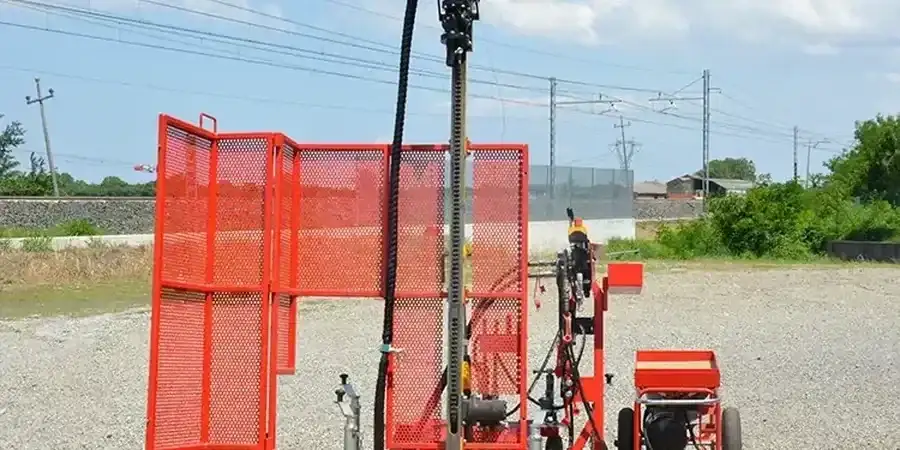
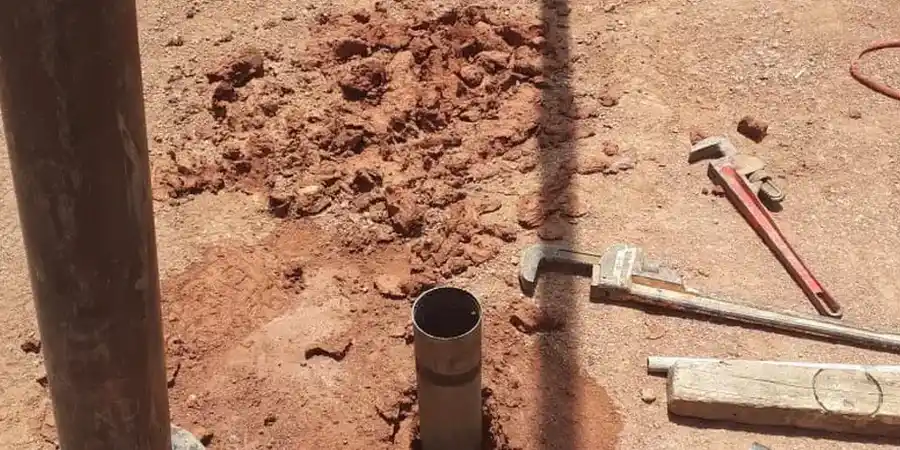
Illustrative image of Exploratory test pit in Hull
Technical reference — Hull

Our service areas

Local geology


Hull sits on the low-lying Humber Estuary floodplain, underlain by a sequence of Quaternary and recent deposits. The typical subsurface profile comprises made ground and soft alluvial clays and silts (often termed 'Humber alluvium') overlying glacial till (Boulder Clay) and, at depth, the Mercia Mudstone Group bedrock. The alluvial clays are highly compressible, with high moisture content and low shear strength, presenting significant challenges for foundation design. Groundwater is generally shallow, often within 2–3 metres of the surface, and fluctuates with tidal and seasonal influences. This high water table, combined with the soft clay, leads to potential for differential settlement and bearing capacity issues. The area is also subject to ground gas (methane and carbon dioxide) from organic-rich deposits, requiring gas protection measures in developments. Seismic hazard is low, but liquefaction potential in loose saturated sands beneath the water table should be considered for sensitive structures. These conditions demand careful site investigation and advanced analysis to ensure safe and economical foundation solutions.

Standards used

Our work in Hull adheres to UK geotechnical standards, primarily BS EN 1997 (Eurocode 7) for geotechnical design, supported by BS 5930 for site investigation and BS 1377 for laboratory testing. We also reference the NHBC Standards for residential developments and CIRIA guidance for ground gas and contaminated land. For specific testing, we follow BS EN ISO 22476-3 for Standard Penetration Tests and BS EN ISO 14688-2 for soil classification. All reports are prepared in compliance with the current Building Regulations and local authority requirements.

Need a geotechnical assessment?

Reply within 24h.

Email: contact@geotechnical-engineering.biz

Watch how it works

Why choose us

Our team brings consolidated regional experience to every Hull project, having worked extensively with the local geology and regulatory framework. We operate a calibrated laboratory in the region, ensuring high-quality soil testing and rapid turnaround. Our engineers maintain close coordination with Humber-based contractors and Hull City Council planning officers, facilitating smooth project delivery. We are fully conversant with local ground gas regimes and flood risk considerations, integrating these into solid geotechnical designs. Our commitment to quality and compliance is reflected in our code-compliant reporting and proactive risk management.

Common questions

What are the main ground issues affecting construction in Hull?

The primary challenges are soft compressible alluvial clays with low bearing capacity, a high groundwater table, and ground gas (methane/carbon dioxide) from organic deposits. These require deep foundations (piles or Improvement) for heavier structures, careful drainage design, and gas protection measures. Differential settlement is a key risk, especially on variable made ground. A thorough site investigation tailored to these conditions is essential.

How deep do foundations typically need to be in Hull?

Foundation depth depends on the structure and ground conditions. For low-rise housing, strip footings may be placed at 0.9–1.2 m depth in competent glacial till, but often require deeper excavation or Improvement in soft alluvium. For commercial or industrial buildings, piled foundations extending through the alluvium into the till or Mercia Mudstone are common, with pile lengths of 10–20 m typical. A site-specific investigation is necessary to determine the optimum solution.

What UK standards govern geotechnical work in Hull?

Geotechnical design in Hull follows BS EN 1997 (Eurocode 7) with UK National Annexes. Site investigations are conducted per BS 5930, and laboratory testing per BS 1377. For residential projects, NHBC Standards Chapter 4.2 provides guidance on foundation design in shrinkable clays and ground gas. All work must comply with the Building Regulations 2010 (Part A: Structure) and local planning conditions related to ground conditions.

Is ground gas a common problem in Hull developments?

Yes, ground gas (methane and carbon dioxide) is prevalent due to the organic-rich alluvial deposits and historical landfill sites. A gas risk assessment is usually required for planning permission, involving monitoring of gas concentrations and flow rates. Depending on the gas regime, protective measures such as gas membranes (e.g., geomembrane specification) and ventilated sub-floor voids may be needed to meet Building Regulations and NHBC requirements.

Location and service area

We serve projects across Hull.

Location and service area