HULL UK
HULL
HomeInvestigationEnsayo SPT (Standard Penetration Test)

SPT (Standard Penetration Test) in Hull – Geotechnical Site Investigation

Geotechnical engineering with regional judgment.

LEARN MORE

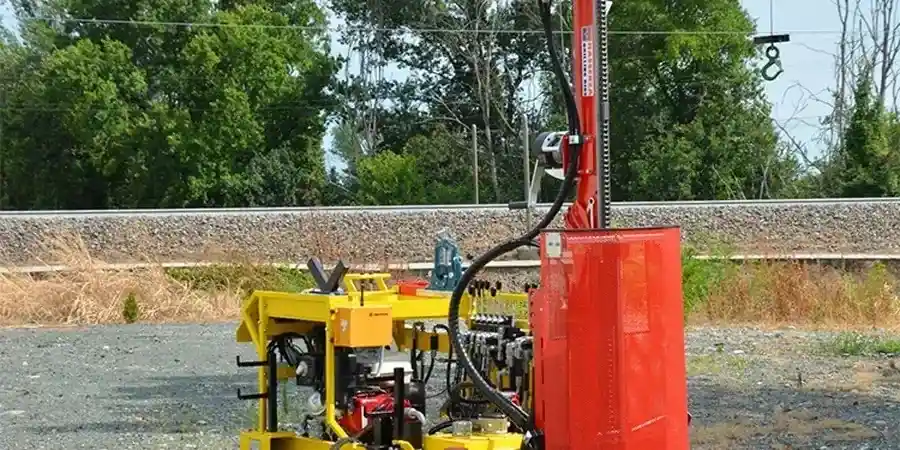
The SPT rig we mobilise in Hull is a track-mounted Dando 2000, compact enough to access the tight streets around the Marina and Hessle Road. It delivers a 63.5 kg hammer dropping 760 mm, measuring N-values every 300 mm in the borehole. For projects on the Humber estuary floodplain, where soft alluvial clays and peat layers are common, the Standard Penetration Test provides the raw data for bearing capacity calculations and liquefaction screening under Eurocode 7. We typically extend the bore to 15–20 m depth to reach the chalk bedrock that underlies much of Hull.
Illustrative image of SPT (Standard Penetration Test) in Hull
In Hull's soft alluvial clays, an SPT N-value of 6 can mean the difference between a shallow strip footing and a piled foundation.

Our service areas

This service complements our laboratory testing work for a complete project analysis.

Scope of work

In Hull, we often see contractors over-estimate bearing capacity in the upper 3 m because the crust looks stiff. The SPT reveals the true story: N-values of 4–8 in the soft clay, then jumping to 25+ in the underlying glacial till. We correlate these blows directly with undrained shear strength using Stroud's method. Before finalising foundation depths, we cross-check against CPT data to validate the profile in variable ground. For projects near the River Hull, where groundwater is shallow, we also use permeability field tests to design dewatering systems. The combination gives a solid geotechnical model.
Technical reference — Hull

Area-specific notes

A 10-storey residential block on St Andrew's Quay was designed assuming N-values of 12 in the upper clay. Our SPT campaign revealed N-values of 5–7 in the same horizon, with a thin peat layer at 4.5 m that the desk study missed. The foundation had to be redesigned from shallow pads to 600 mm diameter bored piles socketed into the chalk. That redesign cost three weeks and £45,000 extra. A thorough SPT programme upfront would have caught it for a fraction of that cost.

Need a geotechnical assessment?

Reply within 24h.

Email: contact@geotechnical-engineering.biz

Standards used


BS EN ISO 22476-3:2005 – Field testing: Standard Penetration Test, BS 5930:2015 – Code of practice for ground investigations, Eurocode 7 (EN 1997-1:2004) – Geotechnical design

Technical parameters

ParameterTypical value
Hammer mass63.5 kg (140 lb)
Drop height760 mm (30 in)
Sampler typeSplit spoon (ID 35 mm, OD 51 mm)
Measured parameterN-value (blows/300 mm)
Correlation outputSu, phi', relative density, E
Max depth typical20–25 m in Hull conditions

Common questions


What is the cost of an SPT test in Hull?

A typical single SPT borehole with continuous sampling to 10 m depth costs between £370 and £620, depending on access, ground conditions, and the number of tests required. For a full site investigation with 4–6 boreholes, the unit cost per test reduces.

How deep do you drill SPT boreholes in Hull?

We typically drill to 15–20 m to penetrate the soft alluvial clays and verify that the underlying chalk or glacial till is competent for foundation design. Shallower depths (5–8 m) are used for low-rise residential projects where only the upper crust matters.

What is the difference between N-value and bearing capacity?

The N-value is a direct measure of penetration resistance (blows per 300 mm). Bearing capacity is derived from N-values using empirical correlations (e.g., Terzaghi, Peck) combined with soil type, groundwater, and foundation geometry. The SPT provides the raw input; we calculate the bearing capacity as part of the interpretive report.

Location and service area

We serve projects across Hull.

Location and service area