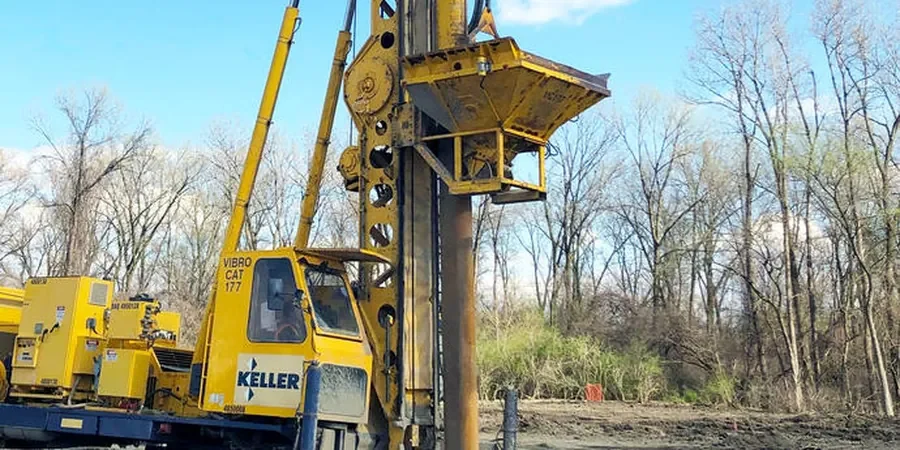
Ground improvement in Hull represents a critical discipline within geotechnical engineering, addressing the fundamental challenge of constructing safely and durably on the region's often weak and compressible soils. This category encompasses a range of techniques designed to modify the physical, mechanical, or chemical properties of the ground, enhancing its bearing capacity, reducing settlement potential, and mitigating the effects of problematic ground conditions. In a city like Hull, which sits largely on the floodplain of the River Hull and the Humber Estuary, the necessity for robust ground improvement cannot be overstated; it is the invisible foundation upon which the city's regeneration, from the Green Port Hull project to new residential developments, is being built. Without these interventions, the risks of differential settlement, structural instability, and long-term maintenance issues would render many projects economically unviable or technically impossible.
The local geology presents a specific set of challenges that make ground improvement essential. Much of Hull is underlain by a thick sequence of Quaternary deposits, including glacial tills, glacial lake clays, and extensive alluvial and estuarine deposits from the Holocene. These soils are frequently soft, normally consolidated clays and silts with a high organic content, particularly in low-lying areas and former marshlands. The presence of peat lenses and laminated clays is common, and these materials exhibit low shear strength and high compressibility. Furthermore, the region's history of industrial activity has left a legacy of made ground, often containing heterogeneous fill materials with uncontrolled composition. This geological context means that traditional shallow foundations are rarely sufficient, and a deep understanding of local ground behaviour is required to select and design effective improvement strategies, often beginning with a detailed unsaturated soil analysis to accurately characterise the soil's behaviour under varying moisture conditions.
Any ground improvement scheme in Hull must be carried out in strict accordance with the UK's comprehensive regulatory framework. The primary standard is Eurocode 7 (BS EN 1997): Geotechnical Design, which mandates a risk-based approach to design, ensuring both ultimate and serviceability limit states are satisfied. This is supported by the UK National Annex and a suite of execution standards, notably BS EN 16228 for drilling and foundation equipment, and BS EN 16907 for earthworks. The specification for treated ground must align with the standards for earthworks in the Specification for Highway Works (SHW), particularly Series 600, if the project involves infrastructure. Environmental compliance is equally crucial; the Environment Agency's strict controls on groundwater protection and the management of waste soils, especially when dealing with contaminated land or using deep mixing methods, require careful consideration. The use of binders like lime and cement is governed by standards such as BS EN 459 and BS EN 197, and a robust lime and cement stabilization design must be validated through rigorous laboratory and field trials to prove performance and environmental compatibility.
The application of ground improvement in Hull spans a wide spectrum of project types. Large-scale infrastructure works, such as the A63 Castle Street improvement and flood defence schemes along the Humber, rely heavily on techniques to stabilise embankments and improve foundation ground. The city's ambitious housing growth targets, which involve building on brownfield and greenfield sites with challenging ground, demand cost-effective solutions like vibro stone columns or deep soil mixing. The renewable energy sector, particularly the offshore wind industry centred at the Siemens Gamesa blade factory, requires vast areas of stable, load-bearing platforms for heavy manufacturing and laydown yards, often achieved through advanced geomembrane specification as part of a reinforced earth or containment system. Even smaller-scale commercial builds and residential extensions benefit from these techniques, where managing organic soil management and treating soft spots is essential to prevent future structural distress. In every case, the common goal is to create a predictable, engineered ground response that meets the stringent performance criteria of modern construction.
Ground improvement is the process of enhancing the engineering properties of soil to support construction safely. In Hull, it is frequently necessary due to prevalent soft alluvial clays, silts, and peat deposits along the Humber floodplain, which lack the strength and stiffness for conventional foundations, making treatment essential to control settlement and ensure stability for any significant structure.
Ground improvement in Hull is governed by Eurocode 7 (BS EN 1997) for geotechnical design, using a risk-based approach. Execution must follow standards like BS EN 16228 for equipment and BS EN 16907 for earthworks. Environment Agency permits are also critical for methods affecting groundwater or using binders near sensitive receptors.
The choice depends on a detailed ground investigation and the specific project requirements. Factors include the soil profile, groundwater conditions, loading characteristics, and settlement tolerances. A specialist will interpret data from laboratory tests on the compressible Hull clays to evaluate options like deep soil mixing, vibro stone columns, or surcharging with vertical drains.
Ground improvement treats the soil mass itself, creating a monolithic, improved block that can support raft foundations, eliminating the need for structural floor slabs and pile caps. This often results in faster construction, reduced concrete use, and a lower carbon footprint. It also mitigates the risk of differential settlement between piled and unpiled areas of a development.