HULL UK
HULL
HomeIn-SituPermeabilidad en campo (Lefranc/Lugeon)

Field Permeability Test (Lefranc / Lugeon) in Hull

Geotechnical engineering with regional judgment.

LEARN MORE

A few years back we were called to a housing development on the western edge of Hull, near the Humber estuary. The ground looked fine on the surface, but the moment we started excavating for a retaining wall, water just kept seeping in from all sides. That job taught us the hard way that Hull's alluvial and glacial till deposits can hide very variable permeabilities. A field permeability test using the Lefranc or Lugeon method gives you the real hydraulic conductivity before you commit to a design. We run these tests in boreholes or directly in trial pits, always following BS 5930 procedure. The data feeds straight into dewatering design, drainage layouts and even slope stability checks. For deeper investigations we also recommend a georadar survey to map hidden sand lenses that can act as preferential flow paths.
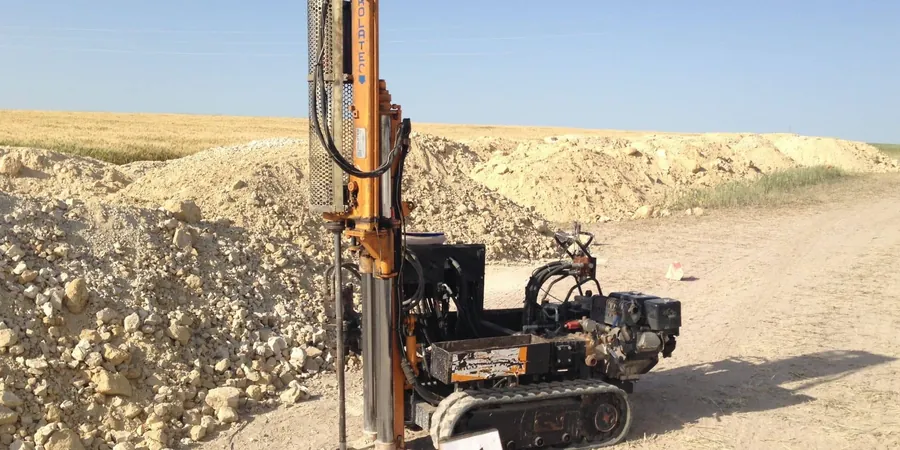
Illustrative image of Field permeability test (Lefranc/Lugeon) in Hull
Hull's glacial till permeability can jump tenfold within metres — a single borehole log is not enough to size your drainage.

Our service areas

Scope of work

One mistake we still see contractors in Hull make is assuming that a single soil description from a borehole log is enough to size a drainage system. That logic works on uniform sands, but Hull's ground is anything but uniform. Glacial tills with random sand and gravel pockets sit on top of alluvial silts and clays, so permeability can jump tenfold within metres. The Lefranc test gives you a direct measure of hydraulic conductivity in the exact stratum you are interested in, while the Lugeon variant is better for fractured or jointed ground.
  • Lefranc constant head for permeable soils and granular fills
  • Lefranc falling head for low-permeability tills and clays
  • Lugeon packer test for rock or stiff clay with discontinuities
We always run a density test with sand cone on the same strata to correlate porosity with permeability — two numbers that together tell the full story.
Technical reference — Hull

Area-specific notes

Hull grew fast during the 19th century as a major port, and much of the city's infrastructure sits on soft alluvial deposits of the Humber floodplain. The ground here is young in geological terms — mostly Holocene silts and clays with high moisture content. When permeability is underestimated, the consequences show up quickly: waterlogged excavations, heaving floors, clogged drainage systems and even localised slope failures along the Humber bank. In Hull we have seen retaining walls fail because the drainage blanket was designed for a permeability of 10⁻⁵ m/s when the actual ground was closer to 10⁻³ m/s. A field permeability test removes that guesswork and gives your designer a measured value to work with.

Need a geotechnical assessment?

Reply within 24h.

Email: contact@geotechnical-engineering.biz

Standards used


BS 5930:2015 — Code of practice for ground investigations, BS EN 1997-2:2007 (Eurocode 7 – Ground investigation and testing), BS 1377 — Standard test method for field measurement of hydraulic conductivity

Technical parameters

ParameterTypical value
Test methodLefranc constant head / falling head; Lugeon packer
Hydraulic conductivity range10⁻⁶ to 10⁻² m/s (Lefranc); 10⁻⁸ to 10⁻⁴ m/s (Lugeon)
Test depth1.0 m to 30.0 m below ground level
Borehole diameter76 mm to 150 mm
Packer length (Lugeon)0.5 m to 1.0 m
Applied head0.5 m to 5.0 m water column
Duration per stage15 to 60 minutes
Outputk (m/s) per test interval, flow rate vs head plot

Common questions


What is the difference between Lefranc and Lugeon tests?

The Lefranc test measures hydraulic conductivity in soils and soft ground using either constant or falling head. The Lugeon test uses a packer to isolate a specific interval in rock or stiff clay and injects water under controlled pressure, giving a Lugeon value in litres per minute per metre per bar. In Hull we use Lefranc for the glacial tills and alluvial silts, and Lugeon when we hit the chalk or hard clay bands.

How much does a field permeability test cost in Hull?

A standard Lefranc test in a single borehole typically ranges between £440 and £940 depending on depth, access conditions and whether you need constant or falling head. Lugeon tests with packers are at the higher end due to the extra equipment and setup time. We always give a fixed price before mobilisation, so you know exactly what you are paying.

Do I need a field permeability test for a small extension in Hull?

It depends on the ground conditions and the drainage design. If your extension is on shallow strip footings in the glacial till, a single falling head test in a trial pit is often enough to confirm the drainage layer specification. For anything near the Humber floodplain or with a basement, we recommend at least one test per stratum. Building Control in Hull sometimes asks for it when the soil report shows variable permeability.

How long does a Lefranc or Lugeon test take on site?

A single Lefranc test takes about 45 to 90 minutes including setup and stabilisation. A Lugeon test with three pressure steps usually takes 2 to 3 hours per interval. We can test multiple depths in the same borehole in one visit. Our team in Hull typically completes a full day of testing (4 to 6 intervals) and provides preliminary results within 24 hours.

Location and service area

We serve projects across Hull.

Location and service area