HULL UK
HULL
HomeSlopes & WallsCálculo de factor de seguridad (FS)

Factor of Safety Calculation for Hull

Geotechnical engineering with regional judgment.

LEARN MORE

Hull sits on deep alluvial deposits from the Humber estuary, with soft clays and silts extending over 30 metres in many areas. The city's history of land reclamation and flood defence works means the ground can vary significantly within a single site. We've seen cases where a seemingly uniform clay layer hides peat lenses or buried channels that reduce shear strength drastically. That's why a proper factor of safety calculation here isn't a formality — it's a necessity. Before we assign a design FS, we always run a study of soil mechanics to profile the stratigraphy, and when dealing with existing fills we often use test pits and exploratory pits to visually inspect the materials. Our team works to Eurocode 7 partial factors, adjusting the global FS based on the actual variability of the ground, not textbook assumptions.

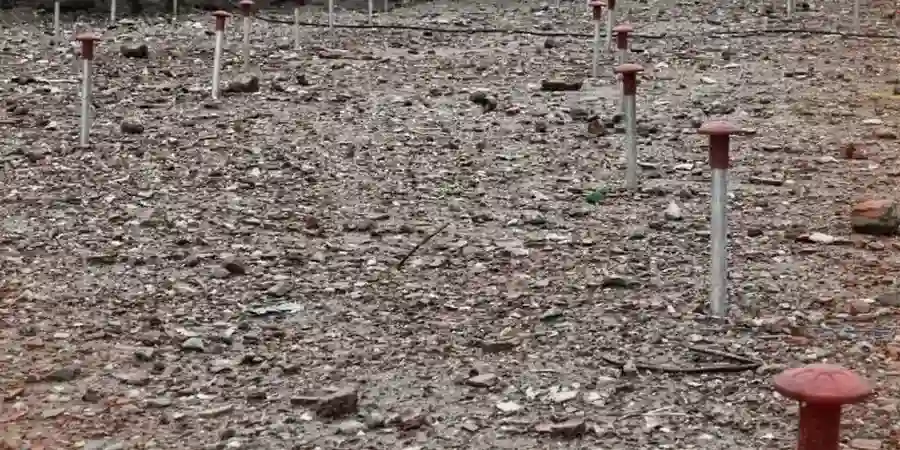
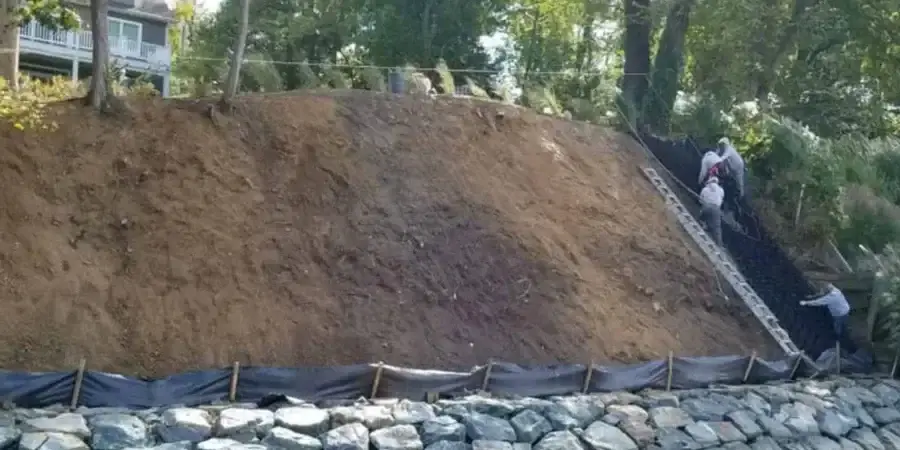
Illustrative image of Factor of safety (FS) calculation in Hull
For soft clays under high water table, we rarely recommend an FS below 2.5 for shallow foundations — site-specific analysis is non-negotiable.

Our service areas

Scope of work

The Humber region has a temperate maritime climate with high rainfall averaging around 660 mm annually, which keeps the water table high and pore pressures elevated. Soft ground conditions in Hull demand a factor of safety that accounts for undrained shear strength in short-term loading and drained parameters for long-term stability. We follow BS EN 1997-1:2004, applying partial factors to actions and resistances separately — a more refined approach than the old global FS of 3. For slope stability we run limit equilibrium analyses with Spencer's method, and for foundations we check bearing capacity against both local shear failure and punching. The combination of soft clay and high water table means we rarely recommend an FS below 2.5 for shallow foundations on natural ground. Each project gets a site-specific assessment, because what works on the west side of Hull near the estuary won't hold on the east side where glacial till appears at depth.
Technical reference — Hull

Area-specific notes

Hull's urban development accelerated after the 19th century dock expansions, with many structures built directly on soft alluvium or over reclaimed marshland. The risk of differential settlement and slope instability is real — we've investigated sites where old river channels had been backfilled with demolition rubble, creating pockets of low-density material. A factor of safety calculation that doesn't account for these hidden features can be dangerously misleading. That's why we always cross-reference borehole logs with historical maps and carry out geophysical surveys when needed. In our experience, the biggest source of failure in Hull is not poor soil per se, but inadequate site investigation that leads to an overestimated FS. The ground here demands respect, and a thorough calculation is the only way to deliver a safe design.

Need a geotechnical assessment?

Reply within 24h.

Email: contact@geotechnical-engineering.biz

Standards used


BS EN 1997-1:2004 (Eurocode 7 – Geotechnical design), BS 5930:2015 (Code of practice for ground investigations), BS 8002:2015 (Code of practice for earth retaining structures), BS 8004:2015 (Code of practice for foundations)

Technical parameters

ParameterTypical value
Analysis MethodLimit equilibrium (Spencer, Bishop simplified) / FEM (PLAXIS 2D)
Partial Factors (EC7)γφ = 1.25 (tan φ'), γc' = 1.25 (cohesion), γcu = 1.4 (undrained)
Typical FS Range (Slopes)1.3 – 1.5 (temporary), 1.5 – 2.0 (permanent)
Typical FS Range (Foundations)2.5 – 3.0 (shallow), 2.0 – 2.5 (deep)
Water Table Assumption1.0 – 2.5 m below ground level (Hull average)
Software UsedSlide, SLOPE/W, GeoStudio, Plaxis, Rocscience suite

Common questions


What factor of safety is typically required for slope stability in Hull?

For permanent slopes in Hull's soft ground, we typically target an FS of 1.5 under drained conditions using effective stress parameters. Temporary excavations can work with 1.3 provided pore pressures are controlled. These values follow Eurocode 7 recommendations adjusted for local ground variability.

How much does a factor of safety calculation cost in Hull?

The cost depends on complexity, but a standard FS calculation for a single slope or foundation scenario ranges between £510 and £1,150 including reporting. If multiple scenarios or advanced FEM analysis are required, the price increases accordingly. Contact us for a project-specific quote.

What software do you use for FS analysis?

We use industry-standard software including Slide, SLOPE/W, GeoStudio and Plaxis 2D. Our engineers are trained in both limit equilibrium and finite element methods, choosing the most appropriate tool based on the problem's complexity and the required accuracy for Hull's ground conditions.

Location and service area

We serve projects across Hull.

Location and service area