HULL UK
HULL
HomeSlopes & WallsRetaining wall design

Retaining wall design in Hull – Geotechnical guidance from the lab

Geotechnical engineering with regional judgment.

LEARN MORE

For retaining wall design in Hull, we always start with Eurocode 7 and the local ground conditions. The city sits on deep glacial till overlying chalk, with a high water table near the Humber estuary. That combination means lateral earth pressures can shift quickly if drainage isn't accounted for. We've seen projects where ignoring the perched water in the till led to wall failure within two years. That's why we insist on a proper site investigation first, including a dilatometer test to measure in-situ stress and stiffness, and permeability field tests to understand groundwater flow. Without those, the design is just guesswork.
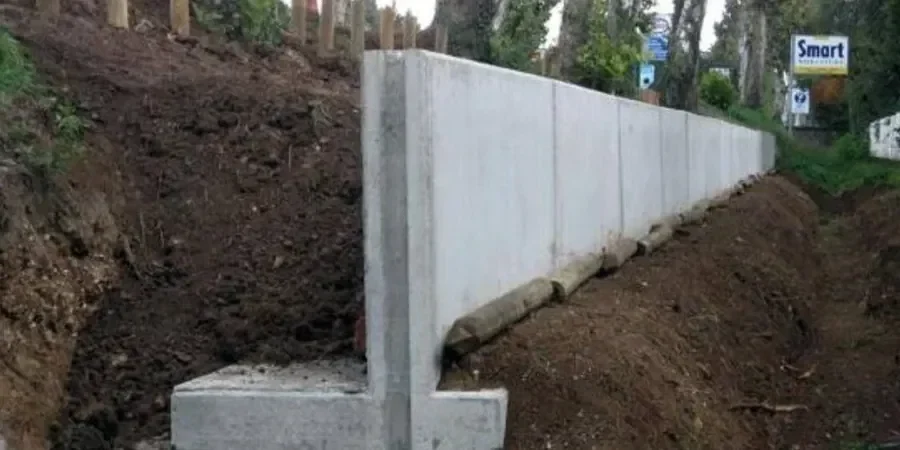
Illustrative image of Retaining wall design in Hull
The glacial till in Hull hides sand lenses and weathered zones that can shift lateral earth pressures dramatically — test before you design.

Our service areas

Scope of work

What we see most often in Hull is that people assume the glacial till is uniformly stiff. It's not. The till here has sand lenses and weathered zones that change the soil parameters over just a few metres. One week you're in firm clay, the next you're into a loose sandy layer that drains water straight into your wall. For retaining wall design, that variability forces us to run more frequent soil tests than you would in, say, the London Clay. We also factor in the tidal influence from the Humber — the water table can fluctuate over a metre daily near the river, which directly affects active and passive pressures. Our lab team uses that data to calibrate the soil parameters for each wall section.
Technical reference — Hull

Area-specific notes

We use a 50-kN dynamic cone penetrometer truck for the initial ground investigation in Hull. The rig drills through the till and chalk to collect undisturbed samples at 1.5-metre intervals. If the water table is high, we switch to a hollow-stem auger to avoid washing out the fines. The biggest risk in retaining wall design here is underestimating the hydrostatic pressure behind the wall — especially after heavy rain. Hull gets about 680 mm of rainfall annually, and the till is slow to drain. We always model worst-case scenarios with the water table at the ground surface, then check the factor of safety against sliding and overturning.

Need a geotechnical assessment?

Reply within 24h.

Email: contact@geotechnical-engineering.biz

Watch how it works


Standards used

Eurocode 7 (EN 1997-1:2004) – Geotechnical design, BS 8002:1994 – Code of practice for earth retaining structures, BS 5930:2015 – Code of practice for site investigations

Technical parameters


ParameterTypical value
Soil unit weight (γ)18–21 kN/m³
Effective cohesion (c')0–5 kPa
Effective friction angle (φ')28–36°
Coefficient of lateral earth pressure at rest (K₀)0.45–0.65
Modulus of subgrade reaction (kₛ)20–60 MN/m³

Common questions

What soil parameters do you need for retaining wall design in Hull?

We need the effective friction angle and cohesion from triaxial tests, the soil unit weight, and the coefficient of lateral earth pressure. The high water table in Hull also requires permeability data and the groundwater regime.

How much does a retaining wall design report cost?

A typical geotechnical design report for a retaining wall in Hull costs between £880 and £2.990, depending on wall height and complexity. The price includes site investigation, lab testing, and the signed design.

Do you follow Eurocode 7 for retaining wall designs?

Yes, all our designs comply with Eurocode 7 (EN 1997-1:2004) and BS 8002 for earth retaining structures. We also reference the local ground investigation data from BS 5930.

How deep do you drill for a retaining wall investigation in Hull?

We typically drill to at least 1.5 times the wall height, or until we reach competent chalk. In Hull, that means boreholes of 6 to 12 metres depth, depending on the wall location.

Can you design walls for the tidal zone near the Humber?

Yes, we have experience with walls in tidal areas. We model the fluctuating water table and account for wave loading and scour. The design includes a drainage system that remains effective during high tide.

Location and service area

We serve projects across Hull.

Location and service area