HULL UK
HULL
HomeExcavationsAnálisis geotécnico para túneles en suelo blando

Geotechnical Analysis for Soft Soil Tunnels in Hull

Geotechnical engineering with regional judgment.

LEARN MORE

Our team mobilises a full suite of site investigation equipment across Hull, from hollow-stem auger rigs to continuous sampling systems designed for the soft alluvial and estuarine deposits that dominate the Humber floodplain. When you're planning a tunnel drive through these low-strength, high-plasticity clays and silts, the first thing we do is run a targeted field programme. We integrate calicatas exploratorias for visual logging of shallow horizons, then follow with deeper SPT boreholes to map strength profiles. The goal is always the same: capture the variability that soft ground tunnelling demands, so your design faces no surprises.
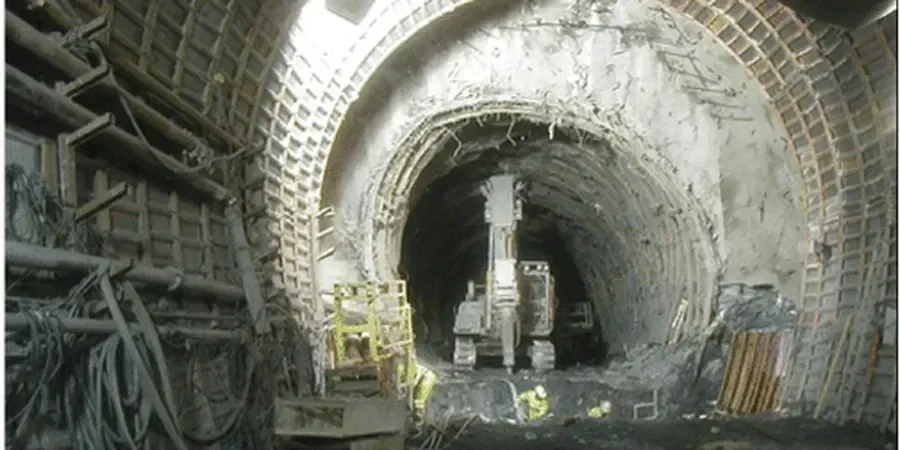
Illustrative image of Geotechnical analysis for soft soil tunnels in Hull
Soft ground tunnelling in Hull demands a clear picture of undrained shear strength and consolidation behaviour — without it, face stability and settlement predictions are guesswork.

Our service areas

Scope of work

Hull sits on deep Quaternary sediments, with the Mercia Mudstone Group lying well below. In practice, that means the upper 15–20 metres are often soft clays with occasional sand lenses. For soft soil tunnels, we measure undrained shear strength via triaxial testing and vane shear, complemented by ensayo CPT for continuous penetration resistance logs. Key parameters we target include:
  • Undrained shear strength (cu) from UU triaxial and field vane
  • Soil stiffness modulus (Eu) via pressuremeter tests
  • Permeability from falling-head tests in standpipes
  • Consolidation characteristics (Cv, Cc) from oedometer tests
All work follows BS EN 1997-1:2004 and the UK National Annex, with boreholes logged to BS 5930.
Technical reference — Hull

Area-specific notes

One thing we see again and again in Hull is the underestimation of consolidation settlements around tunnel headings. The soft estuarine clays here take time to drain, and if you don't capture the full consolidation curve from oedometer tests, your short-term stability numbers might look fine while long-term surface settlements creep past acceptable limits. We always flag this early — it's the difference between a tunnel that stays on programme and one that generates claims.

Need a geotechnical assessment?

Reply within 24h.

Email: contact@geotechnical-engineering.biz

Standards used


BS EN 1997-1:2004 (Eurocode 7 – Geotechnical design), BS 5930:2015 (Code of practice for ground investigations), BS EN ISO 22476-3:2005 (Standard penetration test), BS 1377-7:1990 (Shear strength tests – triaxial)

Technical parameters

ParameterTypical value
Undrained shear strength (cu)15–60 kPa (typical Hull soft clay)
Sensitivity (St)2–5 (low to medium sensitivity)
Coefficient of consolidation (Cv)2–8 m²/year
Permeability (k)1×10⁻⁹ – 1×10⁻¹¹ m/s
SPT N-value (soft clay)2–8 blows/300mm
Overconsolidation ratio (OCR)1.0–1.3 (normally consolidated to lightly OC)

Common questions


What are the main risks of tunnelling through Hull's soft clays?

The main risks are face instability due to low undrained shear strength and long-term consolidation settlements. The estuarine clays in Hull are normally consolidated to lightly overconsolidated, so volume loss at the face can lead to significant surface settlement over weeks or months. Proper characterisation of Cv and permeability is essential to predict and manage these effects.

How does a geotechnical analysis for soft soil tunnels differ from a standard site investigation?

A standard investigation might focus on bearing capacity and foundation design. For soft soil tunnels, the emphasis shifts to undrained shear strength, stiffness at small strains, consolidation behaviour, and permeability. We also run more in-situ tests like CPT and pressuremeter to capture continuous profiles, because tunnel design needs to account for variability along the entire alignment, not just at discrete borehole locations.

What is the typical cost range for a soft ground tunnel geotechnical study in Hull?

For a typical urban tunnel project in Hull, the cost ranges from £3,140 to £12,390 depending on the number of boreholes, depth of investigation, and the extent of laboratory testing required. This covers field work, UKAS-accredited lab tests, and a full interpretive report with design parameters.

Location and service area

We serve projects across Hull.

Location and service area