HULL UK
HULL
HomeSlopes & WallsSlope Failure Analysis

Slope Failure Analysis in Hull

Geotechnical engineering with regional judgment.

LEARN MORE

A recent housing development off Hessle Road required a deep cut into the local glacial till. The contractor noticed tension cracks forming along the upper bench after a week of heavy rain. That is exactly when a proper slope failure analysis becomes critical. Without it, the entire site could have experienced a progressive collapse. We investigated the stratigraphy, performed a geotechnical study to confirm the soil parameters, and used limit equilibrium methods to determine the factor of safety. The analysis showed that the slope was stable under dry conditions but dropped below 1.3 when fully saturated. That finding changed the design approach entirely.
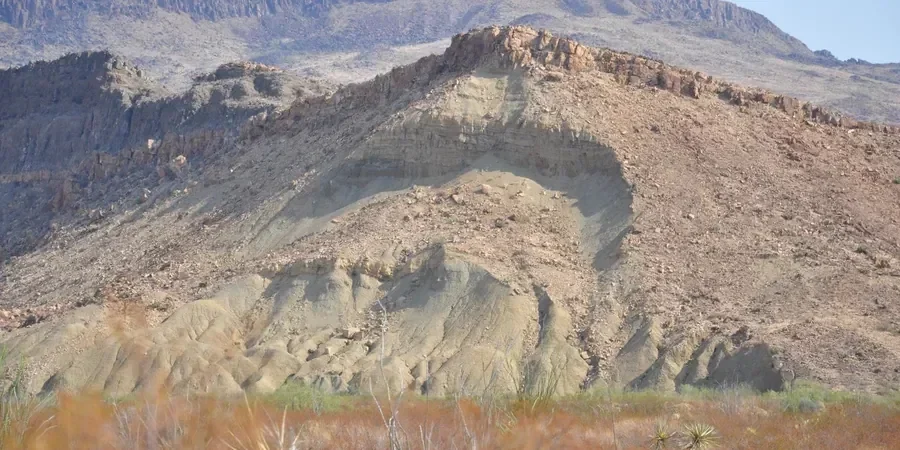
Illustrative image of Slope failure analysis in Hull
A saturated clay slope in Hull can lose over 40 percent of its undrained shear strength within 48 hours of heavy rainfall.

Our service areas

Scope of work

Hull sits on a thick sequence of Quaternary glacial deposits, primarily boulder clay and laminated silts. These materials behave differently depending on moisture content. The groundwater table here fluctuates seasonally, often rising within two metres of the surface after prolonged rainfall. That creates a perfect scenario for pore pressure buildup along potential slip surfaces. For a solid slope failure analysis, we rely on effective stress parameters from consolidated undrained triaxial tests. We also integrate field data from CPT soundings to identify weak layers that might not be visible in borehole logs. The combination of lab and in-situ data gives a realistic picture of the slope's behaviour under worst-case conditions.
Technical reference — Hull

Area-specific notes

The main geological hazard in Hull is the presence of laminated silts interbedded with soft clays. These layers act as drainage barriers, trapping water and creating perched water tables. When a slope is cut, the exposed face can fail rapidly along these weak horizons. We have seen cases where a small excavation for a drainage trench triggered a rotational slip that affected adjacent properties. A thorough slope failure analysis must include a sensitivity check on the residual strength of these silts, because once movement starts, the strength can drop to less than half its peak value.

Need a geotechnical assessment?

Reply within 24h.

Email: contact@geotechnical-engineering.biz

Standards used


BS 5930:2015 Code of practice for ground investigations, Eurocode 7 (BS EN 1997-1:2004) Geotechnical design, FHWA-NHI-05-083 Slope stability reference manual, BS EN 1997-2:2007 Ground investigation and testing

Technical parameters

ParameterTypical value
Soil type encounteredGlacial till, laminated silt, clay
Typical undrained shear strength (Su)40 – 120 kPa
Peak friction angle (φ')22 – 30 degrees
Coefficient of consolidation (cv)1.5 – 4.0 m²/year
Groundwater depth range1.5 – 4.0 m below ground level
Pore pressure ratio (ru) for saturated fill0.45 – 0.65

Common questions


What is the difference between limit equilibrium and finite element methods for slope stability?

Limit equilibrium methods calculate the factor of safety by assuming a rigid sliding mass with a known slip surface. Finite element methods model the full stress-strain response of the soil, so they can capture progressive failure and localised deformations. In Hull's laminated silts, finite element analysis often reveals failure mechanisms that simple methods miss.

How much does a slope failure analysis cost in Hull?

A standard slope failure analysis for a single cross-section typically ranges between £720 and £2,240, depending on the complexity of the geology, the number of layers, and whether you require field testing. The final price is confirmed after a site visit.

When is a slope failure analysis required?

It is required whenever you plan to cut or fill a slope steeper than 1 in 3, or when existing slopes show signs of movement like tension cracks, bulging, or water seepage. Local authorities in Hull often request it for planning applications on sloping sites.

Can you analyse a slope that has already failed?

Yes. Back-analysis of failed slopes is one of our core services. We use the observed failure geometry to estimate the in-situ shear strength at the time of failure. This information is critical for designing a permanent stabilisation solution.

What soil parameters do you need for a reliable analysis?

We need effective cohesion (c'), effective friction angle (φ'), unit weight (γ), and pore pressure conditions. For fine-grained soils like Hull's glacial till, we also require the undrained shear strength (Su) from triaxial tests or field vane tests.

Location and service area

We serve projects across Hull.

Location and service area