HULL UK
HULL
HomeFoundationsBearing Capacity Analysis

Bearing Capacity Analysis in Hull – Geotechnical Assessment for Safe Foundations

Geotechnical engineering with regional judgment.

LEARN MORE

With approximately 260,000 residents, Hull occupies a low-lying estuarine setting where elevations rarely exceed 5 metres above sea level and the water table sits close to the surface. The underlying geology consists of glacial tills over Cretaceous chalk, but in many urban precincts artificial fill from post-war reconstruction extends several metres deep. Our bearing capacity analysis in Hull integrates SPT blow counts from adjacent boreholes with laboratory triaxial data to derive allowable net pressures that respect both the soft alluvial cover and the stiffer till layers beneath. Before finalising foundation sizing we routinely cross-check results against a plate load test to validate deformation moduli under working loads.
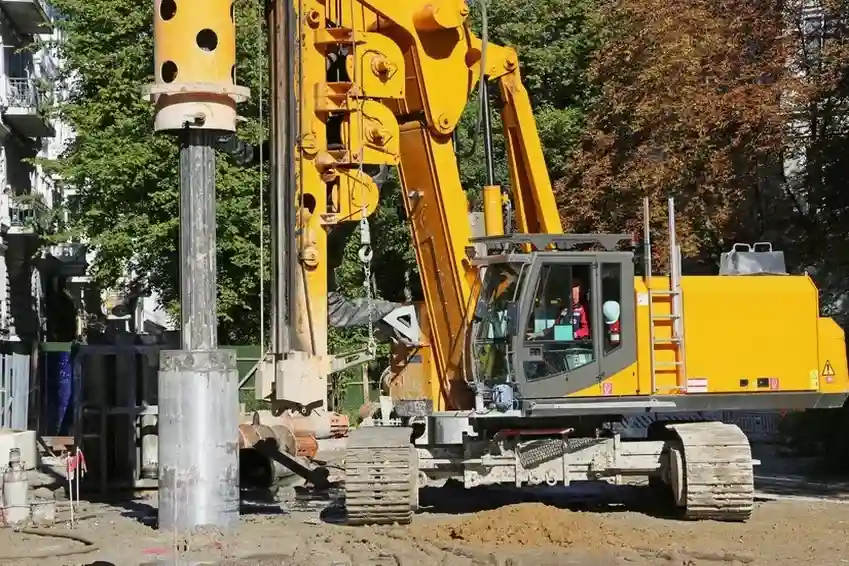
Illustrative image of Bearing capacity analysis in Hull
In Hull's made ground, variations in fill composition can halve the allowable bearing capacity within a single site — layer-specific testing is non-negotiable.

Our service areas

Scope of work

The glacial till in Hull typically exhibits undrained shear strengths between 60 and 150 kPa, but the overlying made ground is highly variable, containing brick rubble, ash, and occasional organic pockets. We carry out a phased investigation starting with trial pits to log fill thickness, followed by SPT borings to 15–20 m depth. The bearing capacity analysis in Hull then uses Terzaghi's general shear failure equation modified with shape and depth factors from BS EN 1997-1:2004 Annex D. For structures on fill, we supplement the assessment with CPT probing to obtain continuous cone resistance profiles that highlight weak lenses missed by discrete sampling. Each parameter set is reviewed against the local NHBC guidelines for low-rise housing and the Humber Local Plan requirements for commercial developments.
Technical reference — Hull

Area-specific notes

BS EN 1997-1:2004 Clause 2.4.7.3 requires that serviceability limit states be checked against both total and differential settlements. In Hull, where compressible fill can be up to 4 m thick beneath Victorian terraces, the risk of excessive settlement far exceeds that of bearing failure. We therefore compute immediate and consolidation settlements using oedometer moduli from undisturbed samples, cross-referencing with local records from the Humber Estuary floodplain. Our bearing capacity analysis in Hull always includes a sensitivity check for water table rise during winter months, as perched water within fill layers can reduce effective stress by 15–20 %.

Need a geotechnical assessment?

Reply within 24h.

Email: contact@geotechnical-engineering.biz

Watch how it works


Standards used

BS EN 1997-1:2004 (Eurocode 7 – Geotechnical design), BS 5930:2015 (Code of practice for ground investigations), NHBC Standards 2024 Chapter 4.2 (Building near trees / shrinkable soils)

Technical parameters


ParameterTypical value
Allowable net bearing pressure (glacial till)150–250 kPa
Allowable net bearing pressure (made ground)40–80 kPa
Undrained shear strength (cu) – till60–150 kPa
SPT N-value (glacial till, 2–10 m)15–35 blows/300 mm
SPT N-value (made ground)4–12 blows/300 mm
Water table depth (typical)1.5–3.0 m below ground level

Common questions

How much does a bearing capacity analysis cost in Hull?

A typical investigation for a residential plot in Hull, including two boreholes to 10 m, SPT profiling, and laboratory triaxial tests, ranges between £550 and £1,480. Larger commercial sites with CPT and plate load testing may exceed this range.

Why is bearing capacity analysis important on Hull's made ground?

Hull's post-war fill is notoriously heterogeneous — brick, concrete, ash, and timber fragments create zones of very low strength. Without layer-specific bearing capacity analysis, foundations can experience differential settlements exceeding 25 mm, leading to structural cracking.

What is the difference between allowable bearing pressure and ultimate bearing capacity?

Ultimate bearing capacity is the stress at which the soil fails in shear. Allowable bearing pressure is that value divided by a factor of safety (typically 2.5–3.0 per BS EN 1997-1) to limit settlement to acceptable levels. In Hull's till, the ultimate value may be 400–750 kPa, but the allowable value is capped at 250 kPa to control settlement.

Do I need a bearing capacity analysis for a single-storey extension in Hull?

Yes. Even light extensions on strip footings require confirmation that the subgrade can support 50–75 kPa without excessive movement. NHBC Standards mandate a minimum investigation depth of 3 m in shrinkable clay areas, and Hull's alluvial clays qualify under that requirement.

Location and service area

We serve projects across Hull.

Location and service area